

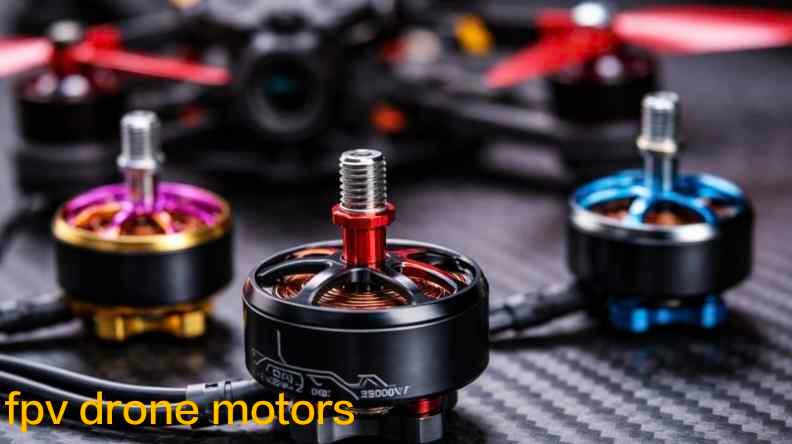
fpv drone motors: the world of FPV drones has evolved rapidly, and at the center of this evolution is motor technology. Whether you fly for freestyle tricks, cinematic shots, or competitive racing, the motor you choose defines how your drone feels in the air. From efficiency improvements to better durability, today’s designs reflect the needs of pilots who demand more control, responsiveness, and reliability.
Understanding Motor Basics in FPV Drones
What makes a motor suitable for FPV flying
Motors used in FPV drones are built for high RPM, quick throttle response, and consistent torque. Unlike camera drones, FPV setups rely on instant power delivery to perform sharp turns, flips, and dives. The design focuses on smooth acceleration and minimal lag, which helps pilots stay connected to their craft.
Core components and design principles
A typical FPV motor consists of a stator, magnets, bearings, and a bell. Stator size, winding quality, and magnet strength all influence performance. High-quality bearings reduce friction, while balanced bells improve stability at high speeds. These small engineering choices create noticeable differences during aggressive flights.
Key Specifications That Affect Performance
KV rating and its real-world impact
The KV rating tells you how many RPM a motor produces per volt. Higher KV motors are often preferred for racing due to their explosive speed, while lower KV options offer smoother control for cinematic flying. Matching KV with battery voltage and prop size is essential for efficiency.
Torque, efficiency, and responsiveness
Torque determines how well a drone handles larger props and sudden throttle changes. Efficient motors generate less heat and extend flight time, which is critical for long practice sessions. Well-tuned fpv drone motors balance power and efficiency to maintain consistent performance.
Choosing the Right Motor for Your Flying Style
Freestyle and cinematic flying needs
Freestyle pilots look for smooth throttle curves and predictable handling. Cinematic flyers prioritize low vibration and steady control for clean footage. Motors with refined winding and stable torque output are ideal for these styles.
Racing and competitive performance
Racing demands speed, lightweight construction, and rapid acceleration. Racers often select high-KV motors paired with smaller props to achieve maximum agility. In this environment, durability is just as important as raw power.
Materials, Durability, and Build Quality
Magnet and stator innovations
Modern motors use advanced magnet alloys and precision-cut stators. These improvements enhance magnetic efficiency and reduce energy loss. As a result, pilots experience better throttle response and less overheating during intense flights.
Bearing quality and crash resistance
Bearings play a major role in longevity. Premium bearings handle dust, impacts, and high RPM more effectively. Strong motor shafts and reinforced bells also help motors survive crashes, a common reality in FPV flying. Investing in well-built fpv drone motors can save money over time by reducing replacements.
Future Trends in FPV Motor Technology
Smarter efficiency and thermal control
Manufacturers are focusing on heat management and energy efficiency. Improved cooling designs and better winding techniques allow motors to perform longer without degradation. These advances support higher power setups without sacrificing reliability.
Customization and pilot-focused design
Pilots now expect options tailored to their needs. From different shaft lengths to specific mounting patterns, customization is becoming standard. As FPV grows globally, fpv drone motors are being designed with community feedback in mind.
FAQ’s about fpv drone motors.
Q. What size motor is best for a 5-inch FPV drone?
- Most 5-inch builds use motors with stator sizes around 2207 or 2306 for balanced performance.
Q. Does a higher KV motor always mean more speed?
- Not always. Speed depends on KV, battery voltage, prop choice, and overall setup efficiency.
Q. How long do FPV drone motors typically last?
- With proper care, quality motors can last hundreds of flights, even with occasional crashes.
Q. Are expensive motors worth it for beginners?
- Mid-range motors are often ideal for beginners, offering good performance without high cost.

Conclusion:
Motor choice is one of the most important decisions in building or upgrading an FPV drone. The right balance of power, efficiency, and durability transforms how a drone feels in the air. As technology continues to improve, pilots benefit from smoother control, better reliability, and more personalized options. By understanding specifications, build quality, and future trends, you can select motors that truly match your flying style and push your FPV experience to the next level.