

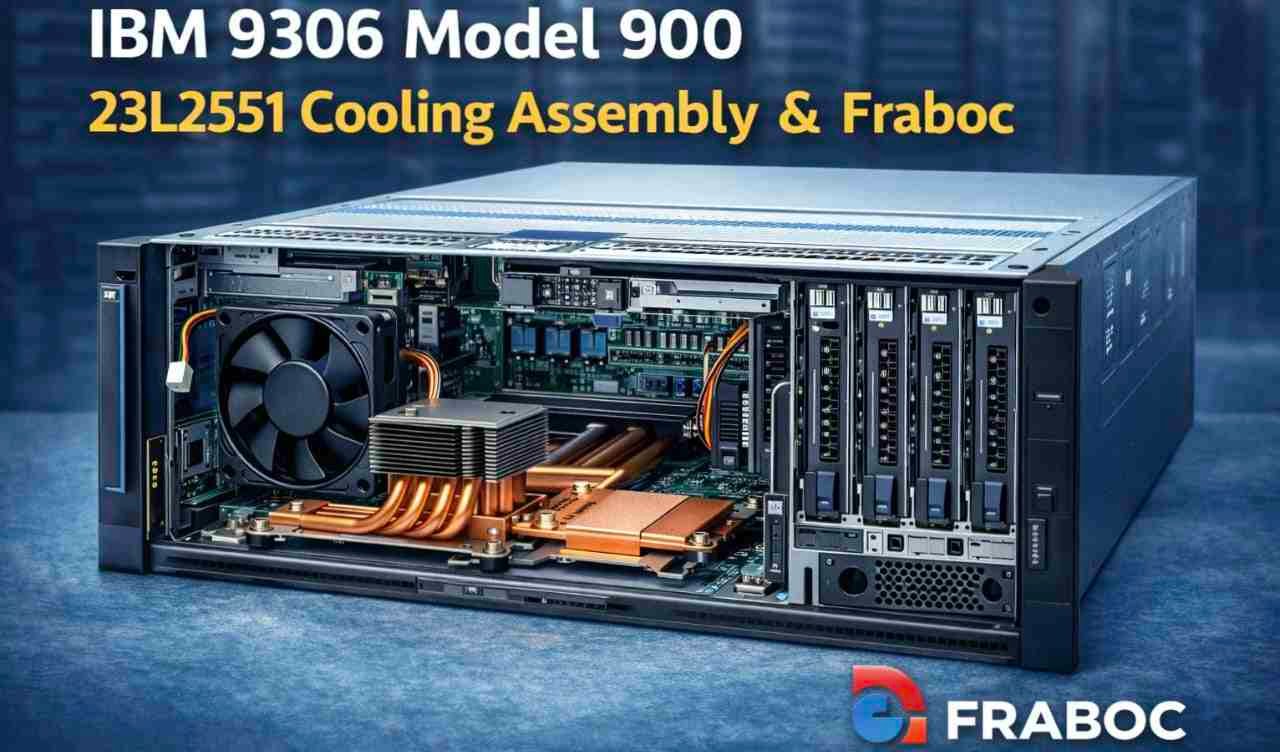
Enterprise hardware from IBM has long been known for durability, and proper thermal management plays a key role in that reputation. When discussing legacy server infrastructure, cooling solutions are often overlooked, yet they directly impact performance, uptime, and hardware lifespan. This article explores how ibm 9306 model 900 23l2551 cooling supports stable operations, why it still matters today, and what administrators should know to keep older IBM systems running efficiently.
Understanding the IBM 9306 Model 900 Hardware Environment
The IBM 9306 Model 900 is part of IBM’s robust server and storage ecosystem designed for enterprise workloads. Built during a time when reliability was paramount, this system was engineered to run continuously in demanding environments.
Role of cooling in legacy IBM systems
Cooling in these systems was not an afterthought. IBM designed dedicated airflow paths, fans, and thermal sensors to manage heat generated by processors, memory modules, and power supplies. Effective cooling ensured consistent performance even under sustained loads.
Why thermal stability matters
Excessive heat can degrade electronic components over time. For enterprise servers, this translates into unexpected downtime, reduced performance, and higher maintenance costs. Proper cooling helps maintain system integrity and predictable operation.
Key Features of the Cooling Assembly (23L2551)

The 23L2551 cooling assembly was specifically designed to match the airflow and power requirements of the IBM 9306 Model 900. Its design reflects IBM’s attention to detail in enterprise hardware engineering.
Design and airflow optimization
The cooling unit uses strategically placed fans to guide airflow across critical components. This minimizes hotspots and ensures even heat dissipation throughout the chassis.
Compatibility and system integration
Unlike generic cooling solutions, the ibm 9306 model 900 23l2551 cooling assembly integrates seamlessly with the system’s physical layout and firmware controls. This compatibility reduces the risk of thermal imbalance and hardware errors.
Performance Benefits of Proper Cooling
Efficient cooling directly influences how well a server performs over time. Even legacy systems can deliver dependable results when thermal conditions are controlled.
Improved hardware longevity
Consistent cooling reduces thermal stress on components such as CPUs, memory, and power modules. This helps extend the usable life of parts that may no longer be easily replaceable.
Stable system performance
When temperatures remain within optimal ranges, the system avoids thermal throttling. This allows workloads to run smoothly without unexpected slowdowns or shutdowns caused by overheating.
Maintenance and Best Practices for Cooling Systems

Keeping an older cooling system effective requires routine attention. Administrators managing legacy IBM hardware should follow a few best practices.
Regular inspection and cleaning
Dust buildup can restrict airflow and reduce fan efficiency. Periodic cleaning of air intakes, exhaust paths, and fan assemblies helps maintain proper cooling performance.
Monitoring temperature and airflow
Using built-in system diagnostics or external monitoring tools allows administrators to track temperature trends. Early detection of abnormal heat levels can prevent failures and costly repairs, especially when relying on ibm 9306 model 900 23l2551 cooling for thermal regulation.
Why Legacy Cooling Solutions Still Matter Today
Although modern data centers use advanced cooling technologies, many organizations still rely on legacy IBM systems for specialized tasks. In such cases, maintaining original cooling components is essential.
Supporting mission-critical legacy applications
Some applications are tightly bound to older hardware platforms. Reliable cooling ensures these systems remain operational without forcing costly migrations.
Cost-effective infrastructure management
Replacing an entire system is often more expensive than maintaining existing hardware. Proper care of cooling assemblies allows organizations to maximize return on investment while ensuring safe operation.
FAQ’s
Q1. What is the purpose of the 23L2551 cooling assembly?
It is designed to regulate airflow and temperature within the IBM 9306 Model 900 system.
Q2. Can generic fans replace the original cooling unit?
Generic fans may not provide the correct airflow or compatibility, increasing the risk of overheating.
Q3. How often should cooling components be cleaned?
In most environments, cleaning every three to six months is recommended.
Q4. Is temperature monitoring necessary for legacy systems?
Yes, monitoring helps detect early signs of cooling failure and prevents damage.
Q5. QDoes proper cooling affect system performance?
Absolutely, stable temperatures help maintain consistent and reliable performance.
Conclusion:
Effective thermal management remains a critical factor in the reliability of enterprise hardware, even years after its release. By understanding the design, benefits, and maintenance needs of ibm 9306 model 900 23l2551 cooling, organizations can continue to operate legacy IBM systems with confidence. Proper cooling not only protects valuable hardware but also ensures stable performance, reduced downtime, and long-term operational efficiency.