

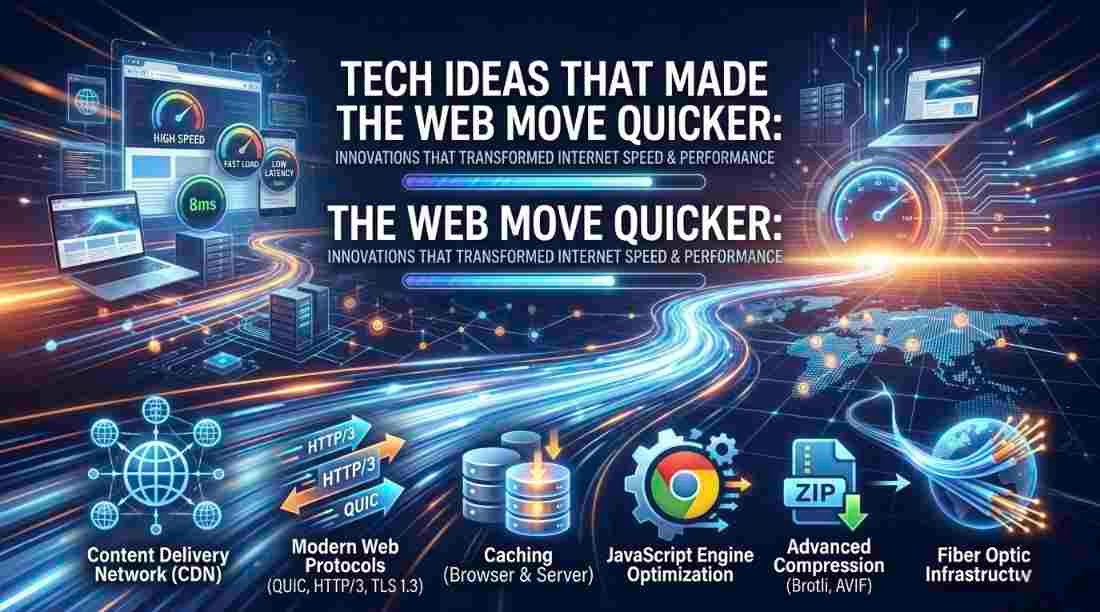
The internet has evolved rapidly over the past few decades. From slow dial-up connections to ultra-fast broadband and optimized websites, technology has played a key role in improving how quickly information travels online. Many innovations have helped reduce loading time, enhance user experience, and make online services more efficient.
Understanding the tech ideas that made the web move quicker helps us appreciate the progress behind modern websites, cloud applications, and streaming services. These innovations are not only about speed but also about efficiency, optimization, and better digital infrastructure.
The Evolution of Faster Web Infrastructure
One of the most important foundations of a faster web is improved internet infrastructure. Early internet connections relied on dial-up networks that could barely support basic browsing. As demand increased, new technologies such as broadband, fiber-optic connections, and advanced networking protocols emerged.
Fiber-optic technology dramatically improved data transmission speeds by sending information through light signals instead of electrical signals. This allowed internet service providers to deliver higher bandwidth and lower latency.
Modern network architecture also introduced optimized routing systems that ensure data packets take the fastest path between servers and users. These infrastructure improvements are among the most important tech ideas that made the web move quicker in the digital era.
Content Delivery Networks and Global Data Distribution
Another major innovation that improved website speed is the Content Delivery Network (CDN). A CDN is a network of distributed servers placed in different geographic locations. Instead of delivering content from a single server, websites store copies of their data on multiple servers around the world.
When a user opens a website, the CDN delivers the content from the server closest to the user. This reduces the distance data must travel and significantly improves loading speed.
How CDNs Improve Website Performance
CDNs enhance performance in several ways. They reduce server load, balance traffic during peak times, and minimize latency for global users. Many large websites rely on CDNs to ensure smooth access to images, videos, scripts, and other web resources.
This approach is considered one of the most impactful tech ideas that made the web move quicker, especially for global platforms that serve millions of users simultaneously.
Efficient Web Protocols and Modern HTTP Standards
Internet communication relies on protocols that define how data moves between servers and browsers. Over time, these protocols have evolved to improve efficiency.
Older protocols often required multiple connections and repeated requests to load a single webpage. Modern standards such as improved HTTP versions introduced multiplexing, header compression, and faster request handling.
These improvements allow browsers to load multiple elements of a webpage simultaneously rather than sequentially. As a result, websites load faster and users experience smoother browsing.
Protocol Optimization and Latency Reduction
Protocol optimization reduces delays that occur when devices communicate over the internet. By minimizing handshake steps and compressing data headers, modern web protocols significantly improve page load speed.
These upgrades represent critical tech ideas that made the web move quicker by optimizing the way browsers interact with servers.
Front-End Optimization and Smart Web Design
Website speed is not only about internet connections or server technology. Front-end development practices also play a major role in performance.
Developers now focus on optimizing website elements such as images, scripts, and stylesheets. Techniques like image compression, lazy loading, and code minification help reduce the amount of data a browser must download.
Lazy loading ensures that images and videos load only when they appear on the user’s screen rather than loading everything at once. This dramatically improves perceived performance and reduces bandwidth usage.
These development strategies highlight how design choices can influence website speed and user satisfaction.
Cloud Computing and Scalable Web Architecture
Cloud computing has become another major factor in improving web speed. Traditional hosting environments often struggled to handle sudden traffic spikes. When too many users accessed a website simultaneously, performance slowed down or servers crashed.
Cloud infrastructure allows websites to scale resources automatically. When traffic increases, additional servers are deployed to handle the load. When traffic decreases, resources scale down to maintain efficiency.
This scalable architecture ensures consistent performance even during high demand periods. Cloud computing platforms also use intelligent load balancing systems that distribute traffic efficiently across multiple servers.
Because of these capabilities, cloud technology is widely recognized among the key tech ideas that made the web move quicker in recent years.
Frequently Asked Questions
Q. What are the main technologies that improved internet speed?
- Several technologies helped improve internet speed, including fiber-optic networks, content delivery networks, optimized web protocols, front-end performance techniques, and cloud computing infrastructure.
Q. Why do some websites load faster than others?
- Website speed depends on factors such as server quality, optimized code, compressed images, CDN usage, and efficient web design practices.
Q. What role do CDNs play in web performance?
- CDNs store website content on servers across multiple locations. This allows users to access data from the nearest server, reducing loading time and improving performance.
Q. How does cloud computing improve website speed?
- Cloud platforms provide scalable resources and load balancing, ensuring websites remain responsive even during high traffic periods.
Q. Why is front-end optimization important?
- Front-end optimization reduces file sizes, improves rendering speed, and ensures browsers can load web pages efficiently.
Conclusion:
The modern internet is far faster and more efficient than it was just a few decades ago. Innovations in networking infrastructure, web protocols, distributed servers, and cloud technology have dramatically improved online performance.
The tech ideas that made the web move quicker demonstrate how continuous technological innovation shapes the digital world. From optimized code and intelligent server systems to global content delivery networks, each advancement contributes to a smoother browsing experience.
As technology continues to evolve, new ideas will further enhance web performance. Faster connectivity, smarter algorithms, and improved infrastructure will ensure that the internet remains responsive, reliable, and capable of supporting the growing demands of the digital age.