

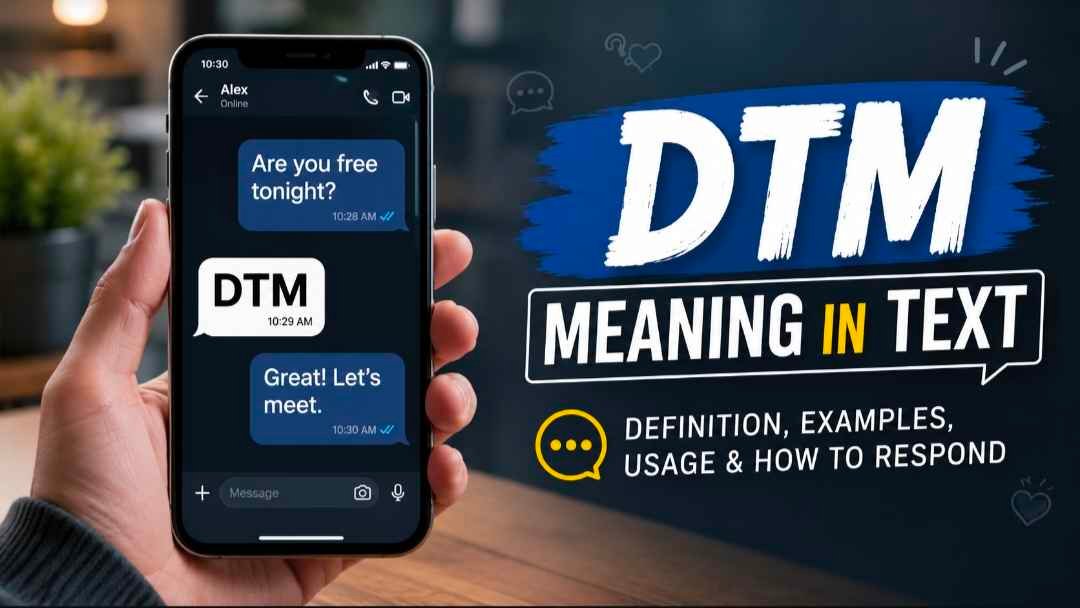
dtm meaning : If someone sends you “DTM” in a text message, it can be confusing if you have never seen the abbreviation before. Like many internet slang terms, DTM can have more than one interpretation, so the surrounding conversation matters. In casual texting, the phrase is commonly associated with “Down To Meet,” especially when people are discussing plans, hanging out, or meeting in person.
Understanding digital slang is not only about memorizing abbreviations. It is also about reading the tone, relationship, and subject of a conversation. A short message such as “DTM tonight?” can have a different feeling from “I’m DTM if everyone goes.” Knowing these small differences can make online conversations much easier to understand.
What Does DTM Mean in Text Messages?
The most common dtm meaning in casual texting is “Down To Meet.” It generally shows that someone is willing or interested in meeting another person. Instead of typing a longer sentence such as “Yes, I would like to meet,” someone may simply use DTM to keep the conversation quick and informal.
For example:
“Are you free for coffee later?”
“Yeah, I’m DTM.”
Here, the person is saying that they are willing to meet for coffee.
The expression can also be connected with plans, social activities, or group outings. Its exact interpretation should always be judged from the messages around it.
Common Examples
“DTM for lunch tomorrow?”
“Sure, I’m DTM.”
“I’m DTM if you guys are going.”
“DTM tonight?”
These examples show how the abbreviation can make a response short while still communicating interest or availability.
How DTM Is Used in Everyday Conversations
The dtm meaning becomes easier to understand when you look at the situation in which it appears. Friends may use it while arranging a movie night, planning dinner, deciding where to go, or discussing a last-minute activity.
For example, imagine a group chat where one person writes:
“Anyone want to grab pizza after work?”
Another person might reply:
“DTM!”
The short response communicates that the person is interested in joining.
The tone can also change depending on the rest of the message. “DTM!” may sound excited, while “I’m DTM if everyone else goes” sounds more relaxed or conditional.
DTM can also appear in dating conversations. If someone asks, “Are you DTM tomorrow?” they may simply be asking whether you are willing to meet. However, the relationship between the two people and the previous messages can influence the intended tone.
This is why reading the complete conversation is more reliable than assuming every abbreviation has only one fixed definition.
DTM on Social Media and Different Platforms
Social media has made abbreviations common in everyday communication. DTM can appear in text messages, group chats, Instagram messages, Snapchat conversations, Discord communities, and other informal online spaces. The context usually determines how the abbreviation should be understood.
On Snapchat, for example, a person might write:
“DTM later?”
This could simply mean that they are asking whether someone wants to meet later.
On Instagram, the abbreviation may appear during a conversation about coffee, shopping, events, or hanging out:
“DTM for coffee this weekend?”
In a gaming community, however, the conversation may involve an activity rather than a physical meetup. Someone might write:
“Anyone DTM for a late match?”
In that situation, the person is asking who is willing to participate.
Other interpretations can sometimes appear in online communities. The source article notes alternatives such as “Down To Move” and “Down To Message,” although these are less common and should not automatically be assumed.
This is an important reason to consider the complete conversation before deciding what DTM means.
Pros and Cons of Using DTM
The dtm meaning is useful because abbreviations make casual communication faster. People can respond to invitations and plans without writing a complete sentence. This is especially convenient in busy group chats where messages move quickly.
Pros include:
- Saves typing time
- Fits casual conversations
- Makes short replies easy
- Works well in group chats
- Can communicate willingness quickly
However, there are also disadvantages.
Cons include:
- Some people may not understand it
- Context can create confusion
- Different communities may use abbreviations differently
- It may sound too informal in professional communication
- A very short reply can sometimes appear cold or unclear
For example, writing “DTM” to a close friend is usually natural. Sending the same abbreviation to a manager, client, teacher, or professional contact may not be appropriate. In formal communication, “I’m available” or “I’d be happy to join” is much clearer.
Another important point is that abbreviations can evolve. Online communities sometimes create their own meanings for short expressions. Therefore, assuming that every DTM message has exactly the same definition can lead to misunderstandings.
How to Respond When Someone Says DTM

Once you understand the dtm meaning, responding becomes fairly simple. Your answer should depend on whether you also want to meet or participate in the suggested activity.
If you agree, you could say:
“Sure, what time?”
“Sounds good!”
“Yeah, let’s do it.”
“Great, send me the details.”
If you are unsure, you can ask for clarification:
“What do you mean by DTM?”
“Do you mean you want to meet?”
If you are unavailable, there is no need to force the conversation. You can simply say:
“I can’t today, but maybe tomorrow.”
“I’m busy tonight. I’ll let you know.”
This approach is especially useful when you are not completely sure what the other person intended.
When You Should Avoid the Abbreviation
DTM is best suited to informal communication. Professional emails, business discussions, academic messages, and official conversations usually benefit from complete and clear sentences.
For example, instead of writing:
“DTM for the meeting.”
You could write:
“I’m available for the meeting.”
That version removes ambiguity and sounds more professional.
Frequently Asked Questions about DTM meaning.
Q. What does DTM usually mean?
- In casual texting, DTM commonly means “Down To Meet,” showing that someone is willing or interested in meeting.
Q. Is DTM positive or negative?
- It is generally neutral or positive when used to show interest in plans or availability.
Q. Can DTM have other meanings?
- Yes. Context can change its interpretation, and less common uses may exist in particular online communities.
Q. Is DTM professional slang?
- No. It is better suited to casual conversations with friends or people who understand internet slang.
Q. How should I reply to DTM?
- If you agree, confirm the plan or ask for details. If you are unsure, ask what the person means.
Conclusion:
Learning internet abbreviations can make digital conversations much easier to follow. The dtm meaning in casual texting is most commonly “Down To Meet,” but context remains important because abbreviations can develop alternative interpretations.
The best way to understand DTM is to look at the surrounding conversation, the relationship between the people involved, and the activity being discussed. With that approach, you can usually determine the intended meaning quickly and respond naturally. For casual chats, DTM can be a convenient shortcut, while clearer full sentences are usually better for professional communication.