

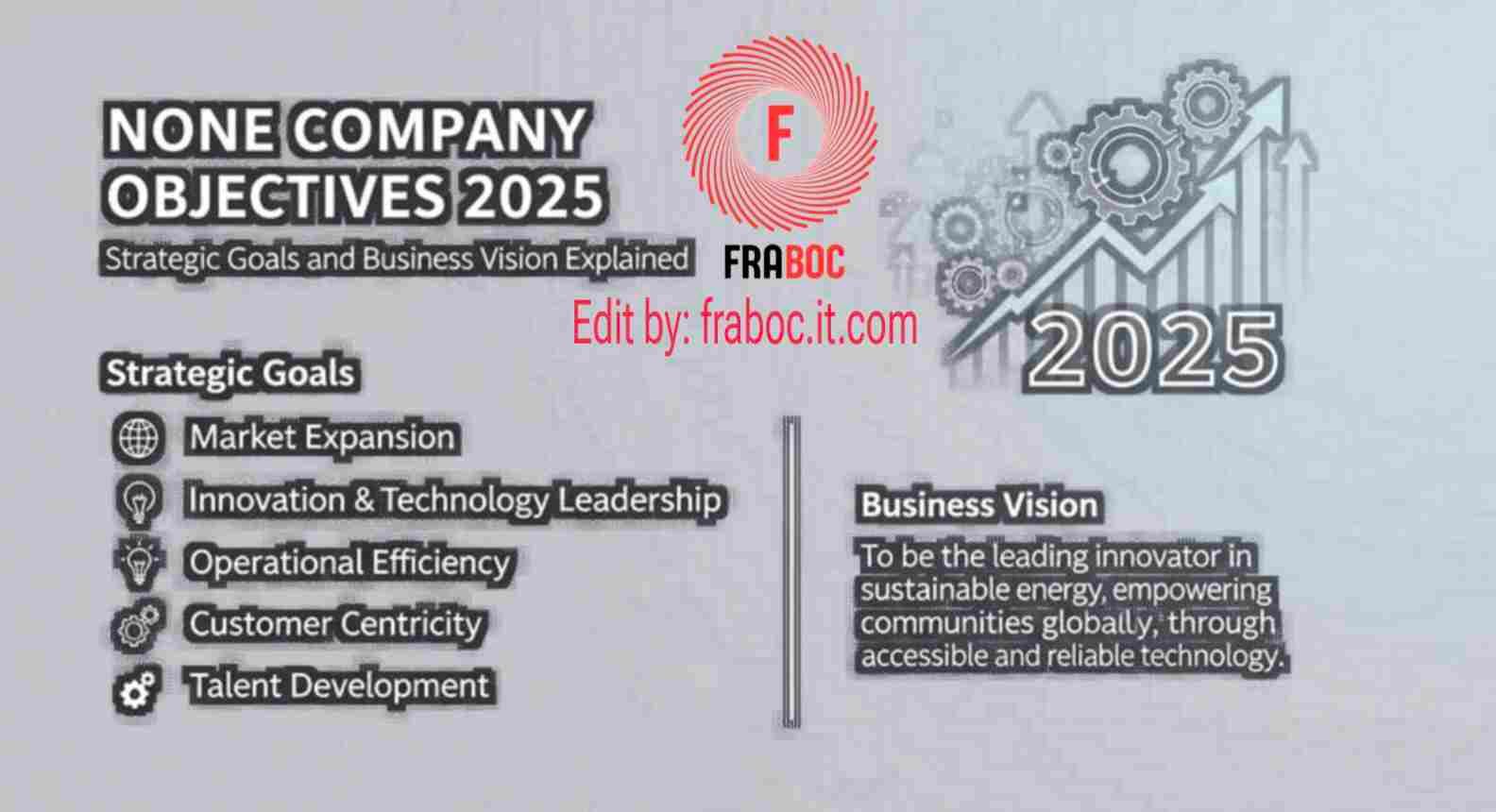
Businesses are entering a period where clarity, adaptability, and purpose matter more than ever. The landscape of global commerce is evolving quickly due to digital transformation, shifting consumer behavior, economic uncertainty, and sustainability pressures. In this environment, defining strong and actionable goals is essential. Understanding none company objectives 2025 helps organizations align strategy with measurable outcomes while staying competitive in fast-moving markets.
Clear objectives act as a roadmap. They guide leadership decisions, improve operational focus, and ensure every department works toward shared milestones. Whether a company is a startup or an established enterprise, structured planning for 2025 is becoming a major priority.
Why Company Objectives Matter More Than Ever
Organizations today operate in a data-driven and highly competitive ecosystem. Without clearly defined objectives, teams lose direction and productivity suffers. Goals provide structure, encourage accountability, and help measure performance through key metrics and KPIs.
Modern business strategy is no longer just about profit margins. Companies are focusing on sustainable growth, digital readiness, customer-centric innovation, and long-term resilience. Objectives translate vision statements into actionable plans. They also help companies prioritize investments, manage risks, and respond to market trends effectively.
When leadership teams define none company objectives 2025, they are essentially setting performance benchmarks that influence budgeting, workforce planning, and technology adoption. Clear objectives ensure that strategic planning is not vague but outcome-oriented.
Core Business Priorities Shaping 2025 Goals
The next wave of corporate planning revolves around practical and measurable priorities. Companies are emphasizing operational efficiency, customer experience optimization, and digital capability enhancement.
Growth remains central, but it is increasingly tied to smart scaling rather than aggressive expansion. Businesses are focusing on profitability, lean processes, and automation to improve margins. Digital infrastructure, cloud systems, AI integration, and cybersecurity resilience are also becoming foundational objectives.
Customer expectations are evolving rapidly. Personalized services, seamless digital experiences, and faster support channels are key differentiators. As a result, organizations are aligning product development and service delivery around user satisfaction metrics and retention goals.
Sustainability is another strong driver. Environmental responsibility, ethical sourcing, and energy efficiency are now part of strategic planning. Investors and customers both evaluate brands based on ESG performance, pushing companies to embed sustainability into their objectives.
Aligning Leadership Vision with Measurable Outcomes
Strategic alignment starts at the top. Leadership teams must translate corporate vision into department-level action plans. This ensures that marketing, operations, HR, finance, and technology divisions work toward unified targets.
Setting SMART Performance Targets
Effective objectives follow the SMART framework — specific, measurable, achievable, relevant, and time-bound. Instead of vague ambitions like “improve performance,” companies set targets such as increasing customer retention by 15% or reducing operational costs by 10% within a fiscal year.
Clear metrics make progress visible. Performance dashboards, quarterly reviews, and analytics tools allow leaders to track outcomes and adjust strategies quickly. Transparent reporting also improves stakeholder confidence.
Cross-Functional Collaboration and Accountability
Modern organizations operate through interconnected teams. Collaborative goal-setting encourages departments to support each other rather than operate in silos. Shared KPIs and interdepartmental planning sessions strengthen alignment and speed up execution.
Accountability frameworks further ensure progress. Clear ownership of deliverables, milestone tracking, and performance incentives keep teams focused and motivated.
Digital Transformation as a Strategic Objective
Technology is no longer optional; it is central to competitiveness. Companies are prioritizing digital transformation to modernize workflows and unlock efficiency.
Automation tools reduce manual processes and human error. Artificial intelligence supports predictive analytics, customer insights, and smarter decision-making. Cloud platforms improve scalability and remote collaboration. Data-driven systems enhance forecasting accuracy and strategic planning.
Digital objectives also include cybersecurity readiness. As threats increase, companies invest in data protection, compliance systems, and secure infrastructure. Building digital resilience protects brand reputation and customer trust.
Organizations that embed digital priorities into none company objectives 2025 gain agility and innovation capacity. They can respond faster to market changes and customer needs.
Sustainability and Social Impact Goals
Corporate responsibility is becoming a core performance indicator. Companies are setting environmental and social objectives alongside financial targets.
Carbon footprint reduction, renewable energy adoption, and waste management programs are increasingly common goals. Sustainable supply chains and ethical production practices are also gaining attention.
Beyond environmental focus, businesses are investing in workforce well-being, diversity initiatives, and community development programs. Purpose-driven branding strengthens customer loyalty and employer attractiveness.
Stakeholders now expect transparency. Reporting frameworks and sustainability disclosures are becoming standard practice. Companies that prioritize responsible growth often experience stronger long-term performance and reputation benefits.
Frequently Asked Questions about none company objectives 2025
Q. What are company objectives?
- Company objectives are clearly defined goals that guide business strategy and operational decisions over a specific time period.
Q. Why are objectives important for 2025 planning?
- They help organizations stay competitive, measure performance, and adapt to technological and market changes.
Q. How do companies set effective objectives?
- They use structured frameworks like SMART goals, performance metrics, and strategic alignment across departments.
Q. Are sustainability goals part of corporate objectives?
- Yes. Environmental responsibility and social impact are now key components of modern business planning.
Q. How often should objectives be reviewed?
- Most companies review progress quarterly and adjust plans annually based on performance data.
Conclusion:
The future of business belongs to organizations that plan with clarity and purpose. Well-defined goals create focus, improve resource allocation, and support sustainable growth. Companies that prioritize innovation, digital readiness, customer experience, and responsible operations will be better positioned for long-term success.
By setting structured and measurable none company objectives 2025, businesses transform vision into results. Strategic planning is no longer optional — it is the foundation of resilience, competitiveness, and meaningful progress in an evolving global economy.